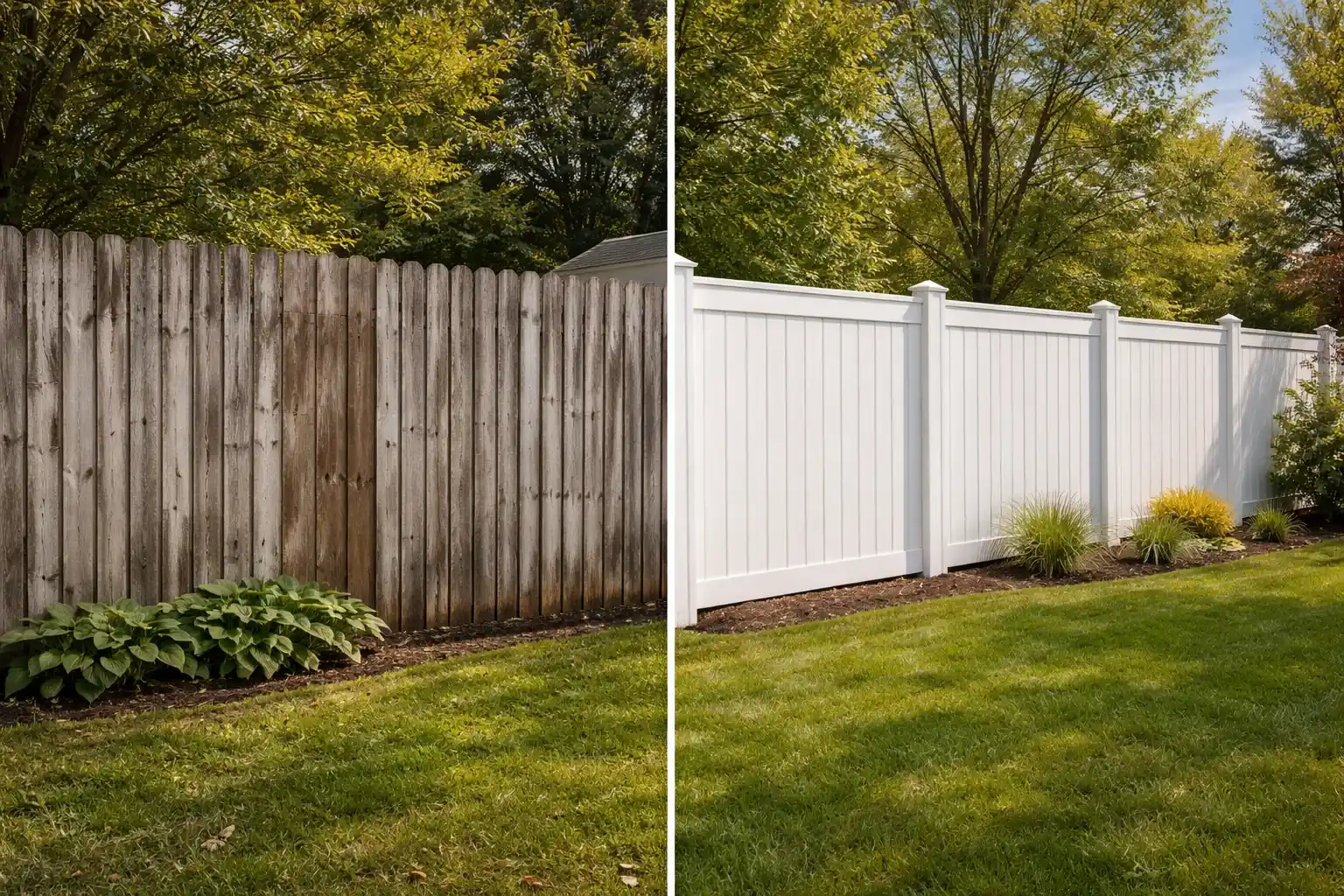
Why Ohio Homeowners Are Choosing Vinyl Over Wood
The Shift Is Real — and It's Showing Up in Backyards
Walk through the newer subdivisions of Warren, Mason, or Powell and you'll notice something: vinyl fencing dominates. It's not a coincidence. Over the past decade, vinyl has become the default choice for suburban Ohio families — driven by HOA requirements, Ohio's brutal freeze-thaw winters, and a straightforward calculation: less maintenance, longer life.
Wood fencing isn't going anywhere. But if you're trying to decide between the two, here's what's actually driving the shift — and how to figure out which material makes sense for your property.
What Ohio Fence Contractors Are Actually Installing
This is the most useful data point: contractors serving Columbus, Cincinnati, and Cleveland's outer suburbs report that vinyl now makes up 60–70% of new residential fence installations in planned communities and newer subdivisions. In those markets, many HOAs prefer or outright require vinyl because it holds its appearance longer and keeps the neighborhood looking consistent.
The picture is different in established urban neighborhoods. Cleveland's historic districts, Cincinnati's older suburbs like Hyde Park and Anderson Township, and rural properties across central and northeast Ohio still favor wood. Contractors in those markets say wood remains the dominant choice — partly for aesthetic reasons, partly because it fits the character of older homes.
How Ohio's Weather Affects Your Fence Material
Ohio's freeze-thaw cycles are hard on outdoor structures. Temperatures swing above and below freezing repeatedly through winter — and wood absorbs that punishment. Moisture gets in, boards warp, posts rot at the base, and within a few years you're looking at repairs or replacement sections.
Vinyl doesn't have that problem. It won't rot, warp, splinter, or absorb moisture. A vinyl fence in Ohio will typically last 20–30 years with almost no maintenance beyond an occasional rinse with a garden hose. Wood, properly maintained — stained, sealed, and repaired annually — can last 15 years. Neglected, you're looking at 5–7 years before it starts failing.
Vinyl vs Wood Fence Cost in Ohio
| Factor | Vinyl | Wood |
|---|---|---|
| Upfront Cost | $25–$40 per linear foot installed | $15–$25 per linear foot installed |
| Lifespan | 20–30 years | 10–15 years (maintained); 5–7 years (neglected) |
| Maintenance | Minimal — occasional rinse | Annual staining, sealing, spot repairs |
| Appearance | Clean, uniform, consistent | Natural aging, warmth, character |
| Ohio Weather Performance | Excellent — freeze-thaw resistant | Fair — prone to rot and warping |
| HOA Acceptance | Strongly preferred in newer suburbs | Accepted in established neighborhoods |
| Repairability | Requires full section replacement | Individual boards easily replaced |
The upfront cost gap is real. Wood runs 30–50% less to install, which matters on a larger property. But factor in 15 years of staining, sealing, and repairs versus 25 years of almost nothing — and vinyl's total cost of ownership is often lower.
Where Wood Still Makes More Sense
Wood has three genuine advantages that vinyl can't match:
Lower upfront cost. For a large property on a tight budget, wood is often the only practical option.
Easier repairs. Damage a single board and you replace that board. Damage a vinyl panel and you're often replacing an entire section — and hoping your contractor can match the original color.
Aesthetic fit. In German Village, Ohio City, Hyde Park, or any of Ohio's historic neighborhoods, vinyl looks out of place. Wood fits the character of older homes and established streets. That's not nostalgia — it's a real consideration for resale value and neighborhood standards.
Which Fence Material Is Right for Your Ohio Property?
Three questions will give you the answer:
Does your HOA have requirements? Check before you buy anything. Many newer Ohio communities specify vinyl or restrict wood entirely.
What's your maintenance tolerance? If you'll stay on top of annual staining and sealing, wood is a legitimate choice. If you want to forget your fence exists for 20 years, vinyl wins.
What does your neighborhood look like? Newer suburb — vinyl fits. Historic neighborhood — wood fits. Rural property — either works, depending on the application.
Ohio homeowners choosing vinyl aren't making a trendy decision — they're doing the math. Lower lifetime maintenance, better performance in Ohio winters, and HOA compatibility make vinyl the practical choice for most suburban properties. Wood remains the right call where aesthetics, budget, or repair flexibility matter more.
Ready to get quotes from Ohio fence contractors who install both? Browse verified contractors in your city and request a free quote directly from their profile.