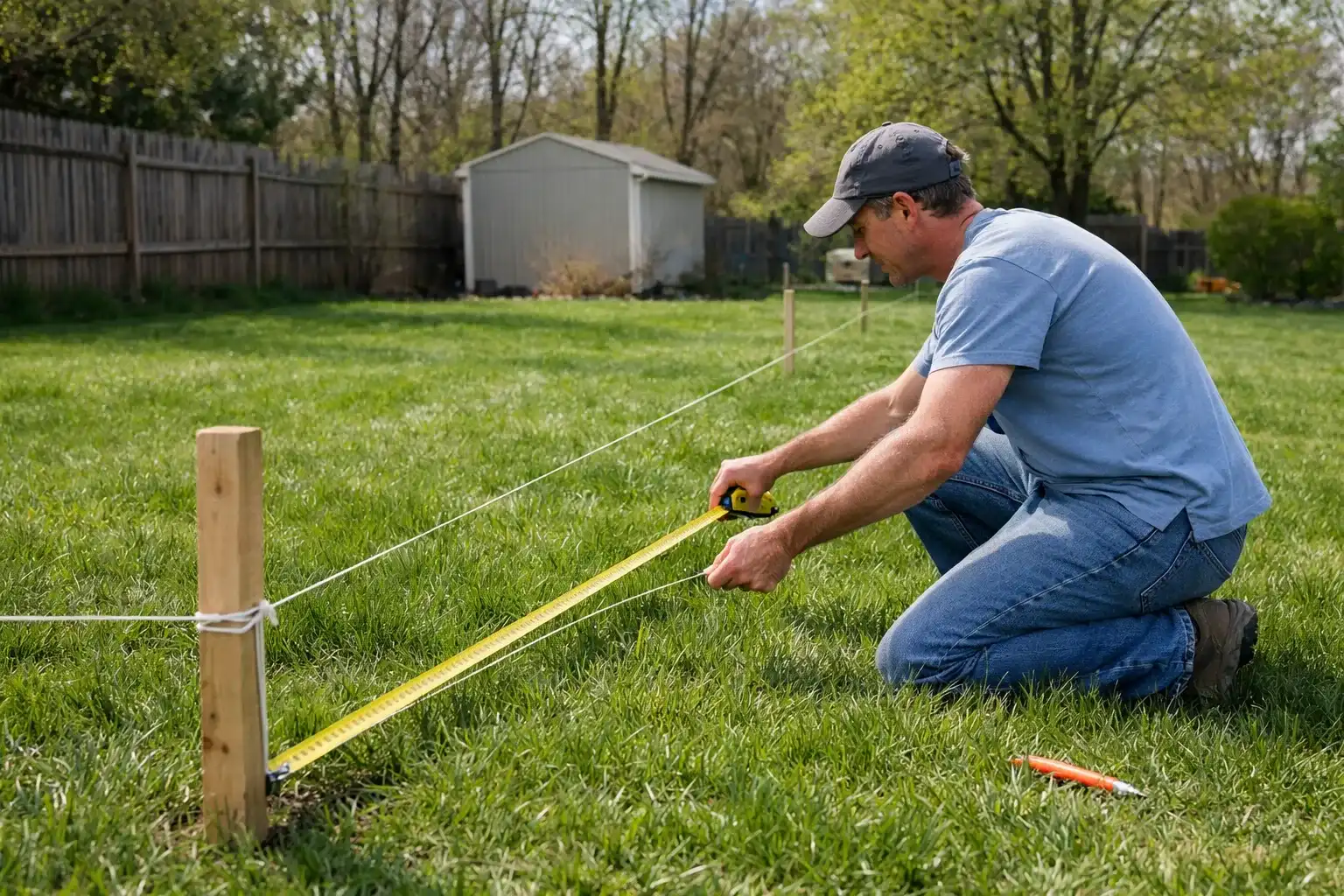
How to Prep Your Yard for a Fence Installation This Spring
Why Prep Work Matters Before Your Fence Goes In
Most fence installation problems — delays, disputes, do-overs — happen because something wasn't confirmed before the crew arrived. Wrong property line. Unmarked utility lines. Missing permit. A neighbor who didn't know it was happening.
None of those are expensive to prevent. All of them are expensive to fix after the fact. Here's exactly what to do before your Ohio fence installation starts.
Step 1 — Call Ohio 811 Before Any Digging Starts
This is required by Ohio law. Before any post holes are dug, you must contact Ohio 811 to have underground utility lines marked. Gas lines, electric cables, water mains, and fiber-optic cables run beneath most Ohio yards — hitting one is dangerous, costly, and illegal.
Call 811 or visit ohio811.org at least three business days before your installation date. Utility companies will mark their lines with flags or spray paint. Make sure your contractor knows where the markings are before they start digging.
Your contractor may handle this — but confirm it. Don't assume.
Step 2 — Confirm Your Property Line Before the Crew Shows Up
More fence disputes come from property line confusion than anything else. A fence installed six inches onto a neighbor's property has to come down — at your expense.
Start by looking for existing survey stakes at the corners of your lot. If you can't find them, your county auditor's office has plot plans — many are available online. If the boundary is unclear or you're fencing a tricky area like a side yard or corner lot, hire a surveyor. In Ohio that runs $200–$400. It's cheap compared to removing and reinstalling a fence in the wrong location.
Step 3 — Check Your Permit Requirements and HOA Rules
Most Ohio cities require a permit for fence installation. Requirements vary by city — height limits, setback rules, and approved materials differ across Columbus, Cleveland, Cincinnati, and their surrounding suburbs. Installing without a permit can result in fines or a mandatory removal order.
Contact your local zoning office to confirm what's required for your specific address. If you're in an HOA, check your covenant documents — HOA rules are often stricter than city code and require separate approval.
Use our Fence Permit Checker → to look up requirements for your Ohio city instantly.
Step 4 — Clear the Fence Line
Walk the full route your fence will follow and remove everything in the way:
- Trim bushes, shrubs, and overhanging branches at least 2–3 feet on each side
- Move furniture, planters, grills, and equipment out of the work zone
- Locate and flag irrigation sprinkler heads with bright tape or small stakes
- Mark any low-hanging power lines or slope changes your contractor should know about
A clear work area lets the crew move efficiently and reduces the risk of damage to your landscaping or irrigation system. Contractors notice when homeowners do this — it often means a faster, cleaner install.
Step 5 — Let Your Neighbors Know
You don't need permission — but a heads-up goes a long way. Tell your neighbors the plan, the approximate start date, and where the fence line runs. If the fence sits near a shared boundary, confirm placement with them directly.
Keep it simple: what you're installing, when it starts, and how long it will take. A two-minute conversation prevents the kind of dispute that ends up in a letter from a lawyer.
Step 6 — Walk the Line With Your Contractor the Day Before
A final walkthrough with your contractor before installation day catches problems while they're still easy to fix. Confirm gate locations, verify measurements, flag any obstacles — slope changes, sprinkler heads, low-hanging lines — and make sure you both agree on start and end points.
This is also the time to clarify what happens if actual measurements differ from the estimate, and to confirm what site cleanup includes.
Your Ohio Fence Installation Prep Checklist
- ☐ Call Ohio 811 (or visit ohio811.org) at least 3 business days before work begins
- ☐ Locate property line using survey stakes, county plot plan, or a surveyor
- ☐ Confirm permit requirements with your local zoning office
- ☐ Check HOA rules and get written approval if required
- ☐ Clear the fence line — trim vegetation, move equipment, flag sprinkler heads
- ☐ Talk to your neighbors before installation starts
- ☐ Walk the line with your contractor and confirm gate locations and measurements
Prep work takes a few hours. Fixing a fence installed in the wrong spot, without a permit, or over a gas line takes significantly longer — and costs significantly more.
Ready to find a fence contractor in your Ohio city? Browse verified contractors by city and request a free quote directly from their profile.