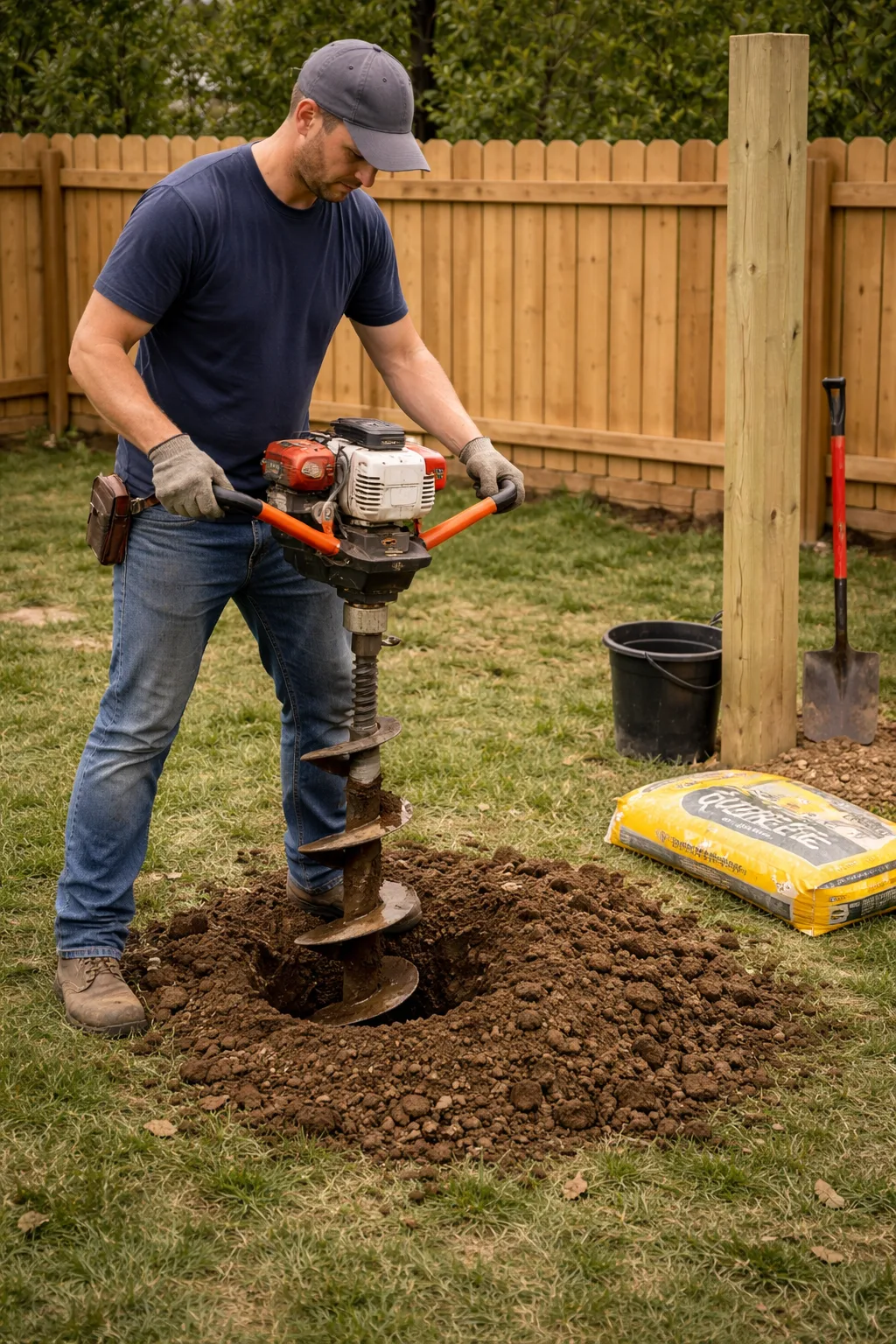
How Deep Should Fence Posts Be in Ohio?
Post Depth Is the #1 Factor in Ohio Fence Longevity
Set posts too shallow in Ohio and your fence will lean, heave, and fail within a few winters. The state's freeze-thaw cycles are relentless — and Ohio's frost line is among the deepest in the Midwest. Posts that don't go deep enough get lifted by expanding soil every spring, loosening connections and throwing your fence out of plumb.
Get the depth right and a well-built fence lasts 20+ years. Get it wrong and you're looking at repairs or full replacement within a decade.
Ohio Frost Line Depths by Region
Ohio's frost line — the depth at which the ground freezes in winter — varies significantly by region. Water in soil expands when it freezes, creating upward pressure called heave. Posts set above the frost line shift with that expansion and contraction every season, loosening over time.
Here's what to expect by region:
- Northeast Ohio (Cleveland, Akron, Cuyahoga County area): 36–42 inches — the deepest frost penetration in the state
- Central Ohio (Columbus area): 30–36 inches
- Southwest Ohio (Cincinnati area): 28–32 inches — the warmest region, but still significant frost depth
Your posts must extend below these depths to sit on stable, frost-protected soil. If your regional frost line is listed at 36 inches, going to 42 inches is a smart margin.
The One-Third Rule — and Why It's Not Enough in Ohio
Many fence installers follow the one-third rule: bury one-third of the post's total length. For a 6-foot privacy fence, that means a 9-foot post with 3 feet underground.
In Ohio, that's not enough for most of the state. A 3-foot burial depth only meets the minimum in extreme southwest Ohio. Anywhere in central or northeast Ohio, the frost line wins — your posts need to go deeper than the one-third rule requires. Always let the frost line guide the depth, not the formula.
Ohio Fence Post Depth by Fence Height
| Fence Height | Minimum Post Length | Minimum Burial Depth (Ohio) | Recommended Post Length (Ohio) | Recommended Burial Depth (Ohio) |
|---|---|---|---|---|
| 4 feet | 7 feet | 30 inches | 8 feet | 36 inches |
| 6 feet | 9 feet | 36 inches | 10 feet | 42 inches |
| 8 feet | 11 feet | 40 inches | 12 feet | 48 inches |
How to Set Fence Posts in Concrete in Ohio
Digging to the right depth is only half the job. Ohio's clay-heavy soils retain moisture around wooden posts, accelerating rot — and loose soil allows movement during freeze-thaw cycles. Concrete is essential.
Two methods work:
Dry-pack: Tamp dry concrete mix into the hole, then water it. Faster on-site but less consistent.
Wet pour: Mix concrete and pour wet. Generally superior in Ohio because it ensures consistent compaction and bonding throughout the hole.
Whichever method your contractor uses, the concrete should be sloped slightly away from the post at the surface so water sheds instead of pooling at the base. That one detail prevents the moisture buildup that causes rot at the post base — the most common failure point on wood fences.
How Ohio's Soil Types Affect Post Installation
Ohio's soils vary enough by region that they change how posts should be set:
Northeast Ohio (Cuyahoga County and surrounding areas): Heavy clay soils retain moisture and shift considerably with freeze-thaw cycles. Wider post holes and quality concrete are especially important here — drainage around the post base is the priority.
Central Ohio (Columbus area): Sandy loam drains better naturally but may require wider holes to ensure lateral stability against wind loads.
Southeast Ohio: Rocky terrain often requires augering or professional equipment to reach proper depth — but rocky soil provides excellent drainage and stability once you're through the surface layer.
What Happens When Posts Are Set Too Shallow
Shallow posts heave upward during spring thaw. Each winter cycle loosens the post further. The fence starts leaning, connections loosen, and sections begin to fail. Fences with posts set above Ohio's frost line typically last 5–8 years before needing significant repairs or full replacement.
Replacing a fence costs far more than setting posts correctly the first time.
Before signing with any Ohio fence contractor, ask specifically how deep they set posts and whether that depth meets or exceeds the frost line for your region. A contractor who knows their work will answer that question without hesitation — and back it up with a warranty.
Browse verified Ohio fence contractors by city — every profile includes contact info so you can ask the right questions before you commit.