Best Fence Types for Ohio Weather
Why Ohio's Climate Is Hard on Fences
Ohio puts fences through more stress than most homeowners realize. Three weather patterns do the most damage:
Freeze-thaw cycles are the biggest threat. Frost lines reach 36–42 inches in northeast Ohio — water in the soil expands when it freezes, heaving posts upward. When the thaw comes, posts settle unevenly, creating gaps, leaning sections, and structural failure over time.
Moisture is constant — humid summers, heavy spring melt, and lake-effect snow in the northeast. Wood rots, untreated metal rusts, and materials warp when they get wet and dry repeatedly across seasons.
UV and heat expansion cause vinyl to expand in summer and contract in winter, wood to fade and crack, and certain finishes to deteriorate faster than the manufacturer expects.
Choosing the right material for your specific Ohio region is the difference between a fence that lasts 5 years and one that lasts 25.
Vinyl Fencing — Best Overall for Ohio
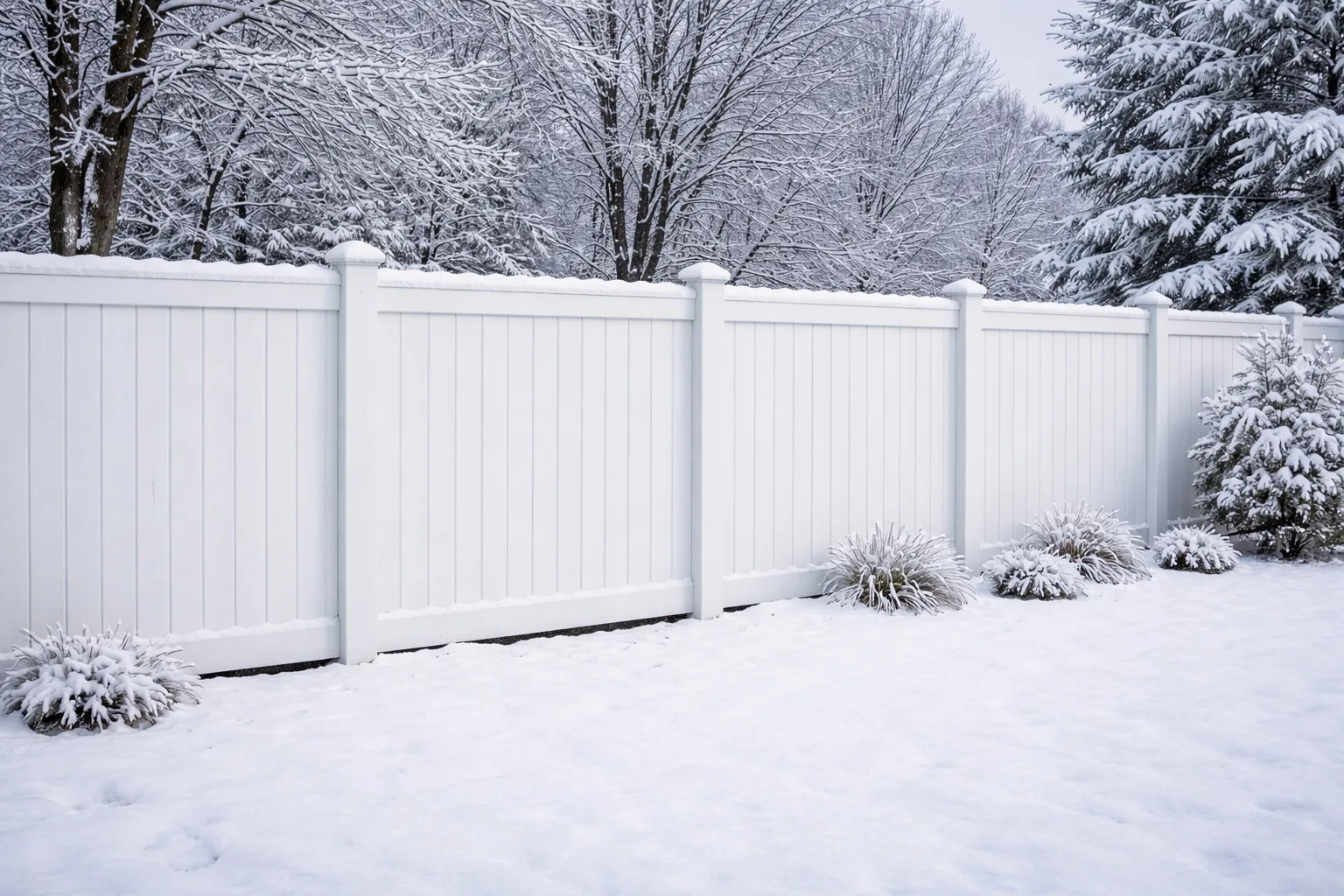
Vinyl is the top choice for most Ohio homeowners and the most installed material in suburban communities across the state. It's completely impervious to moisture — it won't rot, warp, or attract insects. Freeze-thaw cycles don't damage vinyl because the material is non-porous. Quality vinyl handles thermal expansion and contraction through Ohio's seasonal swings without cracking.
Maintenance is minimal — an occasional rinse is all it needs. HOA neighborhoods across Columbus, Cleveland, and Cincinnati suburbs increasingly prefer or require vinyl because it holds its appearance over decades without ongoing work.
Best for: Suburban properties, HOA communities, low-maintenance homeowners
Lifespan in Ohio: 20–30 years
Vinyl Fence →
Aluminum Fencing — Best for Moisture and Lake Erie Properties
Aluminum never rusts — even in high-humidity conditions or near Lake Erie where moisture and salt air are constant factors. It handles heavy Ohio snowfall and freeze-thaw cycles without deteriorating and requires almost no maintenance beyond an occasional rinse.
The tradeoffs: aluminum fences are typically semi-open, so privacy is limited. Cost runs higher than vinyl or wood upfront. But for waterfront properties, lakeside communities, or any property in northeast Ohio's moisture-heavy environment, aluminum is one of the most durable long-term choices available.
Best for: Northeast Ohio properties, lakefront homes, low-maintenance decorative fencing
Lifespan in Ohio: 30+ years
Aluminum Fence →
Wood Fencing — Best for Character and Historic Neighborhoods
Wood remains a legitimate choice in Ohio when properly maintained — and in historic neighborhoods like German Village, Ohio City, and Hyde Park, it's often the only material that fits the character of the street.
Modern pressure-treated lumber handles Ohio's moisture better than older untreated varieties. Cedar and redwood naturally resist rot and are worth the premium over pine — they require less frequent resealing and last longer in Ohio's climate. Plan on resealing every 2–3 years regardless of wood species. Neglect that cycle and you're looking at rot, warping, and accelerated failure.
Wood's real advantage is repairability — a damaged board gets replaced individually, not as an entire section.
Best for: Historic neighborhoods, budget-conscious homeowners comfortable with maintenance, natural aesthetic preference
Lifespan in Ohio: 10–15 years maintained; 5–7 years neglected
Wood Fence →
Chain-Link Fencing — Most Underrated Option in Ohio
Chain-link handles Ohio's freeze-thaw cycles better than most materials because it flexes rather than cracks under pressure. Galvanized steel holds up well; vinyl-coated chain-link holds up better — the coating adds a rust-resistance layer that's especially valuable in high-moisture areas.
It's not a privacy fence and it's not a decorative fence. But for functional applications — securing a yard, containing pets, marking property lines — chain-link delivers decades of service at the lowest cost per linear foot of any material on this list.
Best for: Functional applications, pet containment, budget installations, commercial properties
Lifespan in Ohio: 20+ years with vinyl coating
Chain Link Fence →
Ornamental Iron and Steel — Best for Curb Appeal in Established Neighborhoods
Ornamental iron and steel fencing is common in Ohio's older urban neighborhoods — Cleveland's west side, Cincinnati's established suburbs, and Columbus's historic districts — where the decorative look fits the architecture and property values support the investment.
The critical requirement in Ohio's climate: quality powder coating. Bare or poorly coated iron rusts aggressively in Ohio's humidity. A properly powder-coated ornamental fence resists rust for decades; a cheap coating fails within a few years. Always ask about the coating process and warranty before buying.
Best for: Historic neighborhoods, high-end properties, decorative boundary fencing
Lifespan in Ohio: 20–30 years with quality powder coating; significantly less without
Composite Fencing — Best Low-Maintenance Wood Alternative
Composite fencing — wood fiber combined with plastic polymer — handles Ohio humidity far better than solid wood, resisting rot and warping while offering a wood-like appearance. It avoids vinyl's thermal expansion issues and requires less maintenance than real wood.
The tradeoff is cost — composite runs significantly higher upfront than wood or vinyl. Over 15+ years the lower maintenance may offset that gap, but it's a bigger initial investment.
Best for: Homeowners who want a wood look without wood maintenance
Lifespan in Ohio: 20–25 years
Materials to Avoid in Ohio
- Untreated pine — rots rapidly in Ohio's humid climate, typically failing within 5 years
- Bare wrought iron — rusts aggressively without quality powder coating, requires constant maintenance
- Bamboo — doesn't handle Ohio's freeze-thaw cycles, typically needs replacement within 5–10 years
Best Fence Material by Ohio Region
Northeast Ohio (Cleveland, Akron, Lake Erie shoreline):
The combination of lake-effect snow, heavy moisture, and deep frost lines (36–42 inches) makes vinyl and aluminum the strongest choices. Wood requires extra maintenance in this region.
Browse Northeast Ohio fence contractors →
Central Ohio (Columbus and surrounding suburbs):
More moderate conditions but freeze-thaw cycles still reach 30–36 inches. Vinyl dominates in HOA suburbs; wood works in established neighborhoods with proper maintenance.
Browse Columbus fence contractors →
Southwest Ohio (Cincinnati area):
The mildest Ohio climate — frost lines run 28–32 inches. More material options work here, though vinyl and aluminum still outperform wood for longevity.
Browse Cincinnati fence contractors →
Northwest Ohio (Toledo area):
Similar moisture challenges to northeast Ohio without the lake-effect snow intensity. Vinyl and aluminum are strong choices; wood requires diligent maintenance.
Browse Toledo fence contractors →
The right fence material for your Ohio property depends on your region, your maintenance tolerance, and what you're trying to accomplish. Vinyl wins on longevity and low maintenance. Wood wins on character and repairability. Aluminum wins in high-moisture environments. Chain-link wins on value.
Browse verified Ohio fence contractors by city — every profile includes the fence types each contractor installs so you can find the right specialist for your material.